Can't Sleep in Menopause? How It Affects Your Weight
By the Wellnyra Editorial Team · This article is for general information and is not medical advice.
Quick answer
Sleep often gets worse in perimenopause because of night sweats, shifting hormones and, later on, a higher risk of sleep apnea. Poor sleep can then push your weight up: in lab studies, people who slept less ate about 385 more calories a day. The best-tested fix isn't a pill. It's a short program called CBT-I.
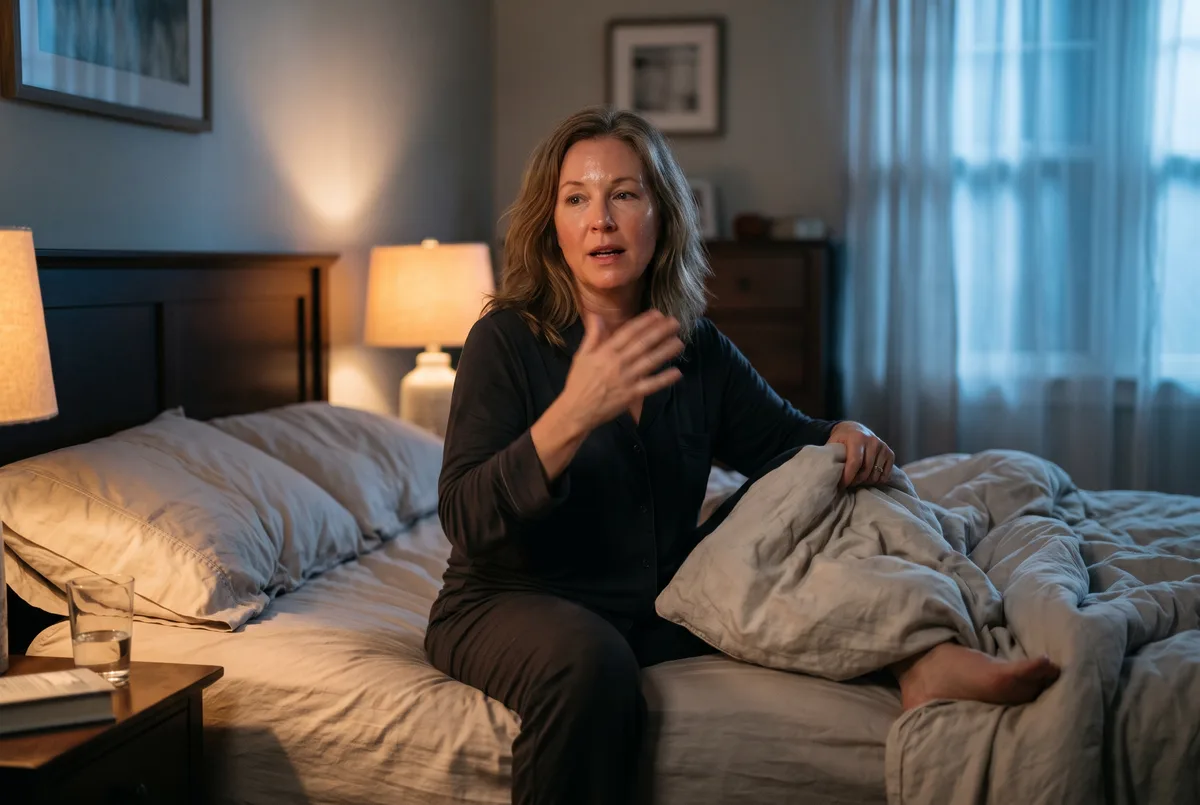
You fall asleep fine, then you're wide awake at 3 a.m., kicking off the covers and running through tomorrow's to-do list. A few weeks of that and you're tired, hungry and wondering why your jeans feel tighter. Those things are connected. Here's how, and what research says actually helps.
In this article
- Why sleep gets worse in perimenopause
- Night sweats: the most common sleep breaker
- Why you wake up at 3 a.m. (and what to do right then)
- Could it be sleep apnea?
- How poor sleep pushes your weight up
- What helps, according to research
- How long does menopause insomnia last?
- When to talk to your doctor
- Frequently asked questions
1. Why sleep gets worse in perimenopause
It's not in your head. Studies put sleep problems at 40% to 56% of women during the menopause transition and after it, compared with 31% of women a few years before (Baker et al., 2018).
The Study of Women's Health Across the Nation (SWAN) followed more than 3,000 US women in their 40s and 50s for seven years. As women moved through the transition, the odds of trouble falling asleep and trouble staying asleep went up. Falling estrogen levels were linked to more trouble with both, and women with more frequent hot flashes had more of every kind of sleep problem (Kravitz et al., 2008).
In other words, this is a real, measurable change, and it usually has more than one cause. That's good news, because each cause has its own fix.
2. Night sweats: the most common sleep breaker
A night sweat is a hot flash that happens while you sleep. Your body suddenly dumps heat, you wake up hot or damp, and by the time you've cooled off, your brain is fully awake.
They also tend to stick around longer than most women expect. In SWAN, frequent hot flashes and night sweats lasted a median of 7.4 years, and they kept going for a median of 4.5 years after the final period (Avis et al., 2015). Women who started having them early, while still having regular periods, had them the longest.
Worth knowing: there are FDA-approved treatments for moderate to severe hot flashes, both hormone and nonhormone options (Office on Women's Health). If night sweats wake you up most nights, you don't have to just wait them out.
3. Why you wake up at 3 a.m. (and what to do right then)
You'll see a lot of confident claims online about a "cortisol hour" at 3 a.m. We couldn't find a study that backs that up for women in menopause, so we're not going to repeat it.
Here's what the research does show. Waking up in the middle of the night, or too early, is one of the main sleep complaints in the transition, and night sweats and lower estrogen both make it more likely (Kravitz et al., 2008). Then a second problem kicks in: you start worrying about being awake, and that worry keeps you awake. After a few weeks, your brain learns that bed at 3 a.m. is a place to think, not sleep.
Breaking that habit is exactly what sleep therapists work on. When you wake up and can't drift back off:
- Don't check the clock. Doing the math on how many hours you have left wakes you up more.
- Cool down first. Kick off a layer, flip the pillow, sip some water.
- If you're still wide awake after a while, get up. Go to another room with dim light and do something boring, like folding laundry or reading a paper book, until you feel sleepy. Then go back to bed.
- Skip the phone. The CDC recommends turning off screens before bed (CDC), and scrolling at 3 a.m. is the opposite.
- Get up at your usual time anyway. Sleeping in after a bad night makes the next night harder.
4. Could it be sleep apnea?
Sleep apnea is when your breathing stops and starts during the night. Most people think of it as a "men's problem." After menopause, it isn't.
In the Wisconsin Sleep Cohort, researchers tested 589 women overnight in a sleep lab. After accounting for age, weight and smoking, postmenopausal women were 2.6 times as likely to have at least mild sleep apnea as premenopausal women, and 3.5 times as likely to have moderate or worse (Young et al., 2003). The researchers said women in menopause who snore, feel sleepy during the day or never wake up rested should be checked.
Apnea matters here because no sleep habit will fix it. If it's part of your problem, you need a sleep test, which your doctor can order.
5. How poor sleep pushes your weight up
This is the part most sleep articles skip. Short sleep doesn't just make you tired. It changes how much you eat.
A review that pooled the results of 11 lab studies found that when people's sleep was cut short, they ate about 385 more calories the next day, with no real change in how many calories they burned (Al Khatib et al., 2017). They also ate more fat and less protein.
+385
extra calories eaten a day after short sleep
+28%
ghrelin, the "I'm hungry" hormone, after 2 short nights
7+ hours
what the CDC recommends for adults
Why does that happen? In a small study, two nights of short sleep raised ghrelin (the hormone that makes you hungry) by about 28% and lowered leptin (the one that tells you you're full) by about 18%. Appetite rose most for calorie-dense, high-carb foods (Spiegel et al., 2004).
To be fair about the limits: those lab studies weren't done in women going through menopause, and the 2004 study was done in young men. But the pattern lines up with what the National Institutes of Health says plainly: not getting enough sleep is linked to weight gain (NIDDK). Add the other changes of this stage, like muscle loss and fat moving to the belly, and sleep becomes one of the easiest levers you have. We cover those changes in weight gain after 40: 6 real reasons it happens.
What helps, according to research
| The problem | What helps | Where to start |
|---|---|---|
| Lying awake, 3 a.m. wake-ups | CBT-I | A trained therapist, a phone program or a CBT-I app |
| Night sweats | A cool room, layers, and treatment if they're frequent | Ask your doctor about hormone and nonhormone options |
| Snoring, gasping, daytime sleepiness | A sleep apnea test | Your doctor can order one |
| Light, broken sleep | Caffeine and alcohol timing, same schedule daily | No caffeine after lunch, no alcohol close to bedtime |
CBT-I: the treatment doctors recommend first
CBT-I stands for cognitive behavioral therapy for insomnia. It's not "talk therapy" about your childhood. It's a short, practical program that retrains your sleep: a set wake-up time, less time lying awake in bed, getting up when you can't sleep, and learning to quiet the 3 a.m. thoughts.
The American College of Physicians strongly recommends CBT-I as the first treatment for chronic insomnia, ahead of sleep aids (NCCIH). And it works in menopause specifically. In the MsFLASH trial, 106 women aged 40 to 65 with insomnia and daily hot flashes got either 6 phone sessions of CBT-I over 8 weeks or 6 sessions of menopause education. After 8 weeks, 70% of the CBT-I group no longer had insomnia, compared with 24% of the education group. Six months in, it was 84% versus 43% (McCurry et al., 2016).
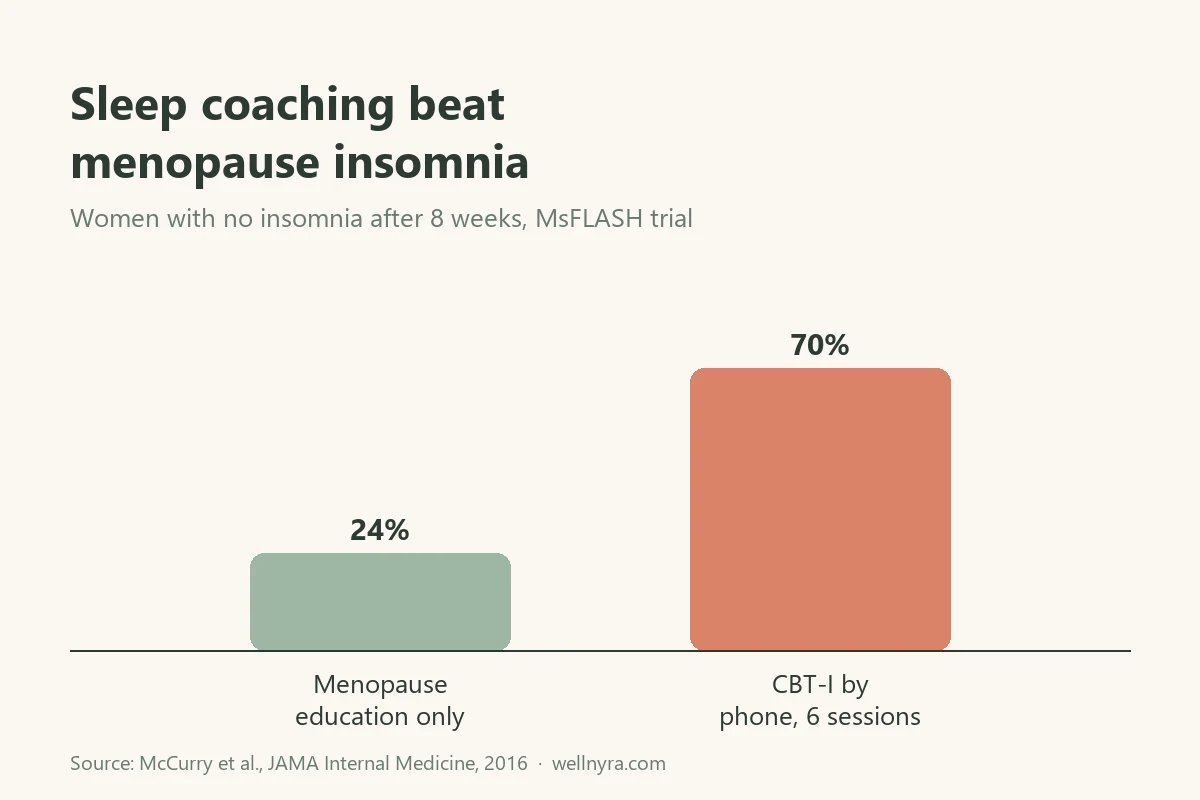
One more surprise from that trial: the number of hot flashes didn't change, but women in the CBT-I group said their hot flashes bothered them less.
How to find it: ask your doctor for a referral to a sleep psychologist or a behavioral sleep medicine provider. Many offer video visits. If you want to start on your own, the US Department of Veterans Affairs offers a CBT-I based app called Insomnia Coach, built for self-guided use. If you might have sleep apnea, get that checked before starting.
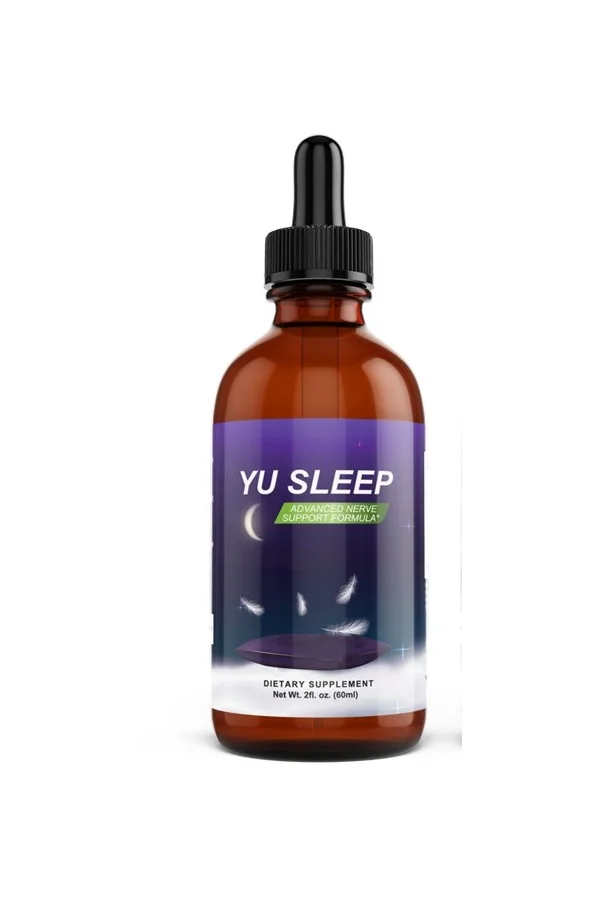
Want a supplement alongside CBT-I? Yu Sleep is a liquid sleep formula with 0.9 mg of melatonin plus magnesium, L-theanine, tart cherry and lemon balm, sold with a 60-day money-back guarantee. Our Yu Sleep review covers the full label, the doses, the price and the refund rules.
See the official Yu Sleep price
Affiliate link: we may earn a commission if you buy, at no extra cost to you. Yu Sleep contains 5-HTP, so if you take an antidepressant, check with your doctor first.
Keep the bedroom cool
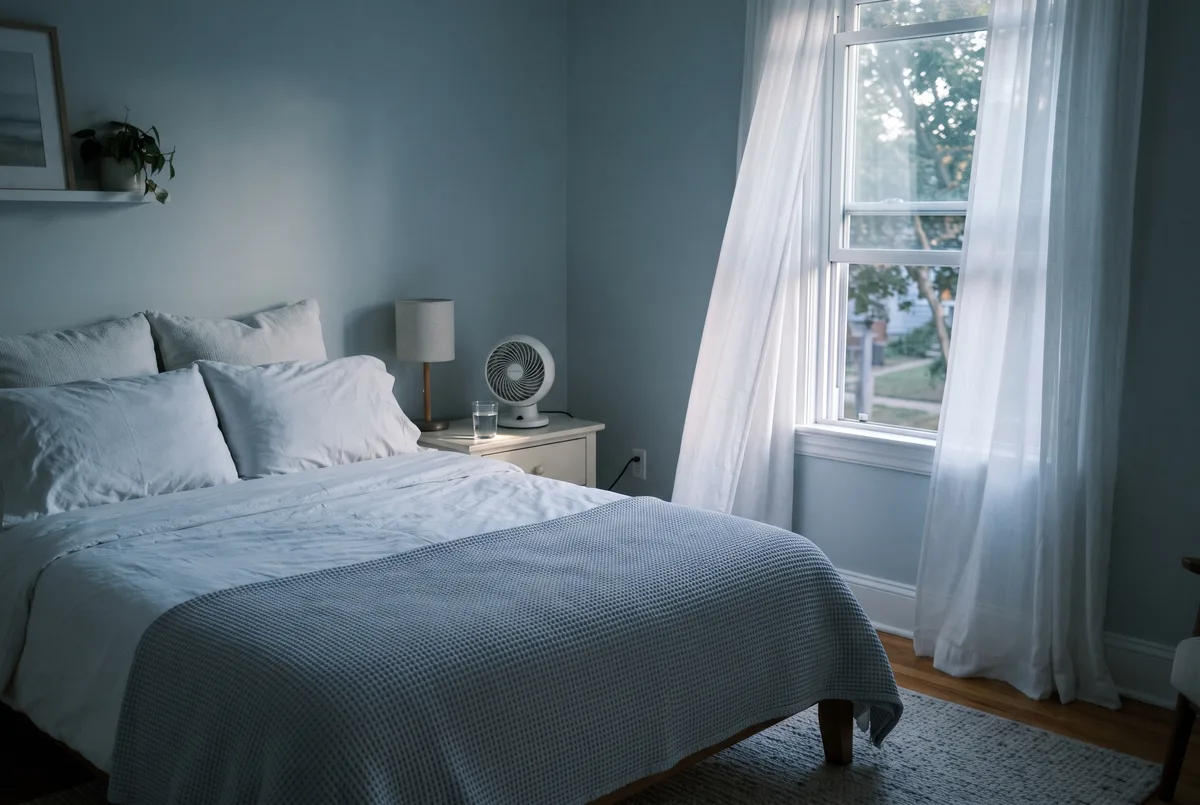
The CDC lists a quiet, relaxing, cool bedroom as one of its core sleep habits (CDC), and with night sweats it matters even more. Lighter pajamas, layered blankets you can kick off, a fan pointed at the bed and a glass of water on the nightstand all help you cool down and fall back asleep faster.
Watch the timing of caffeine and alcohol
The CDC advises avoiding caffeine in the afternoon and evening, and avoiding large meals and alcohol before bed (CDC). Alcohol can make you sleepy at first, but it tends to come back to bite you a few hours later, right around the time a night sweat would wake you anyway. It also adds calories at the exact time of day you're most likely to snack.
Keep the same schedule, even on weekends
Going to bed and getting up at the same time every day is first on the CDC's list (CDC). The wake-up time is the one that matters most. Set it, and keep it after a bad night too.
Ask about hormone therapy and other medical options
In SWAN, postmenopausal women using hormones generally had lower odds of sleep problems than those who weren't (Kravitz et al., 2008). That was an observational finding, not a trial, and hormone therapy isn't right for everyone. It's a decision to make with your doctor, based on your age, your symptoms and your health history. There are nonhormone treatments for hot flashes too.
How long does menopause insomnia last?
There's no single answer, but the research gives some clues. Sleep problems tend to track night sweats, and those lasted a median of 7.4 years in SWAN (Avis et al., 2015). Some changes ease with time: waking too early became less common from late perimenopause to postmenopause (Kravitz et al., 2008). Others, like sleep apnea, become more likely after menopause.
The bigger point: you don't have to wait it out. In the MsFLASH trial, most women's insomnia was gone after 8 weeks of CBT-I, even though their hot flashes were still there.
Talk to your doctor if...
- You snore loudly, someone has noticed you stop breathing or gasp at night, or you're sleepy during the day (possible sleep apnea).
- Night sweats wake you up most nights.
- Poor sleep is affecting your mood, your work or your driving.
- You feel down, anxious or hopeless most days.
- You're thinking of taking melatonin or another sleep supplement and you take blood thinners, have epilepsy or take other prescription medications (NCCIH).
- You want to know whether hormone therapy or a nonhormone treatment for hot flashes is safe for you.
Frequently asked questions about menopause, sleep and weight
References: Baker et al., Nat Sci Sleep 2018, Kravitz et al., Sleep 2008 (SWAN), Avis et al., JAMA Intern Med 2015 (SWAN), Young et al., Am J Respir Crit Care Med 2003, Al Khatib et al., Eur J Clin Nutr 2017, Spiegel et al., Ann Intern Med 2004, McCurry et al., JAMA Intern Med 2016 (MsFLASH), CDC: About Sleep, NCCIH: Melatonin, NIDDK: Factors Affecting Weight, Office on Women's Health: Menopause Symptoms.